Keep more ground covered
Processing brush in place can leave protective surface cover instead of exposing the entire area through grubbing. That cover can help limit erosion; drainage, slopes and the final mulch coverage still matter.
CHOOSE THE RIGHT METHOD
The best clearing method starts with what you want the land to become. Here’s how ground cover, roots, access and the finished surface change the decision for your Virginia property.
THE MULCHING ADVANTAGE
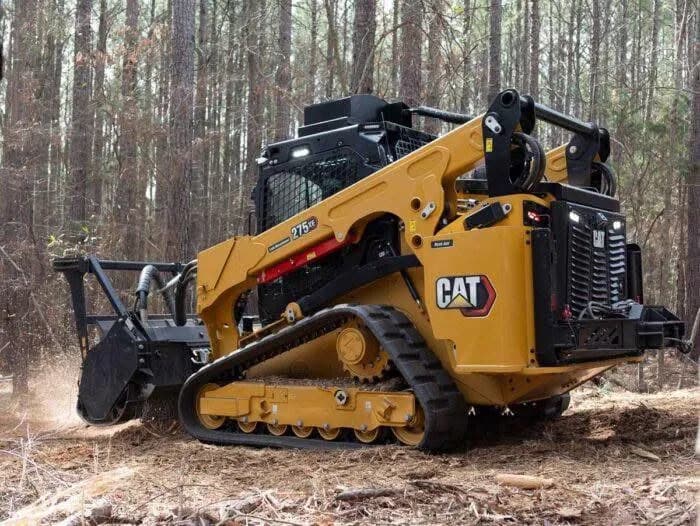
For underbrush, trails and selective clearing, forestry mulching processes suitable vegetation on site without making root excavation part of the job. It can reduce disturbance compared with clearing that removes roots and moves soil.
Traditional clearing can deliver a more complete removal when the next step needs it. A construction footprint calls for a different finish from a woodland trail.
Find the right approach for your land ↗WHY CHOOSE MULCHING?
Processing brush in place can leave protective surface cover instead of exposing the entire area through grubbing. That cover can help limit erosion; drainage, slopes and the final mulch coverage still matter.
Woody material stays on the property and breaks down over time. Mulching changes the surface organic layer rather than stripping it away as part of root removal.
Organic cover can reduce evaporation and moderate surface temperatures. Results depend on coverage, weather and soil conditions; mulch is not a substitute for drainage.
When an on-site mulch finish fits the project, there may be less material to pile, load and haul away. It can also avoid the need for a separate brush-burning operation.
Define trails, open underbrush and work around trees you want to retain. Mark protected trees and boundaries first; equipment access and care around roots remain important.
Opening overgrown areas can make them easier to reach and inspect. Plan the next step around your intended use—regrowth is possible, and an uneven mulch finish is not immediately ready for mowing.
COMPARE THE FINISH
“Land clearing” covers several approaches. Here, traditional clearing means excavation and grubbing where roots or stumps must be removed.
Scroll the table sideways to see all three columns.
| Method | A good fit for | The tradeoff |
|---|---|---|
| Forestry mulching | Suitable brush, undergrowth, trails and selective opening with material left on site. | Mulch, roots and below-ground stumps can remain. Machine traffic can still disturb or compact soil. |
| Clearing & grubbing | Areas that need root or stump removal before grading or construction. | More soil disturbance and material handling; exposed ground needs an erosion-control and stabilization plan. |
| Hand cutting | Small or sensitive areas where limiting heavy-machine traffic matters. | Labor intensive for dense or extensive growth. Cutting alone leaves roots, and debris still needs a plan. |
BEFORE YOU CHOOSE
Tell us your intended use, the vegetation and the finish you need. That makes the comparison useful.
Usually, yes. Mulching treats suitable above-ground vegetation; it does not include excavating every root or below-ground stump. If you need a building pad, utility trench or a smooth seeded lawn, discuss additional clearing and site preparation.
There is no reliable blanket multiplier. Hand cutting can be practical for small or sensitive areas, but dense growth, paid labor and debris handling can make larger jobs costly. Compare estimates for the same area, vegetation, finish and disposal requirements.
No. Some plants resprout from roots, and seeds can remain or arrive later. Choose a follow-up maintenance plan suited to the vegetation and the way you want to use the land.
Learn more about soil cover and disturbance from Virginia Cooperative Extension, organic mulch benefits, and mulching methods and tradeoffs from the U.S. Forest Service. These explain general principles; your property’s conditions determine the scope.
START WITH YOUR PROPERTY
Tell us what you want to clear or prepare, where it is and what you have in mind. Plans and a proposed footprint help with site preparation.
Photos are useful for the initial review. Share them when requested; avoid including people or sensitive personal information.