
Woodland walking trails
Open a defined corridor through overgrowth. Natural terrain, mulch and roots can remain; describe the walking surface you expect before agreeing on the finish.
OPEN A PRACTICAL ROUTE
Connect the parts of your property you want to reach. We clear suitable vegetation along planned trails and access lanes, with the intended use guiding the scope.
DEFINE THE RESULT
A walking trail, a route to an existing gate and a corridor through overgrown woodland have different requirements. Share the start and end points, desired width and how you plan to use the route.
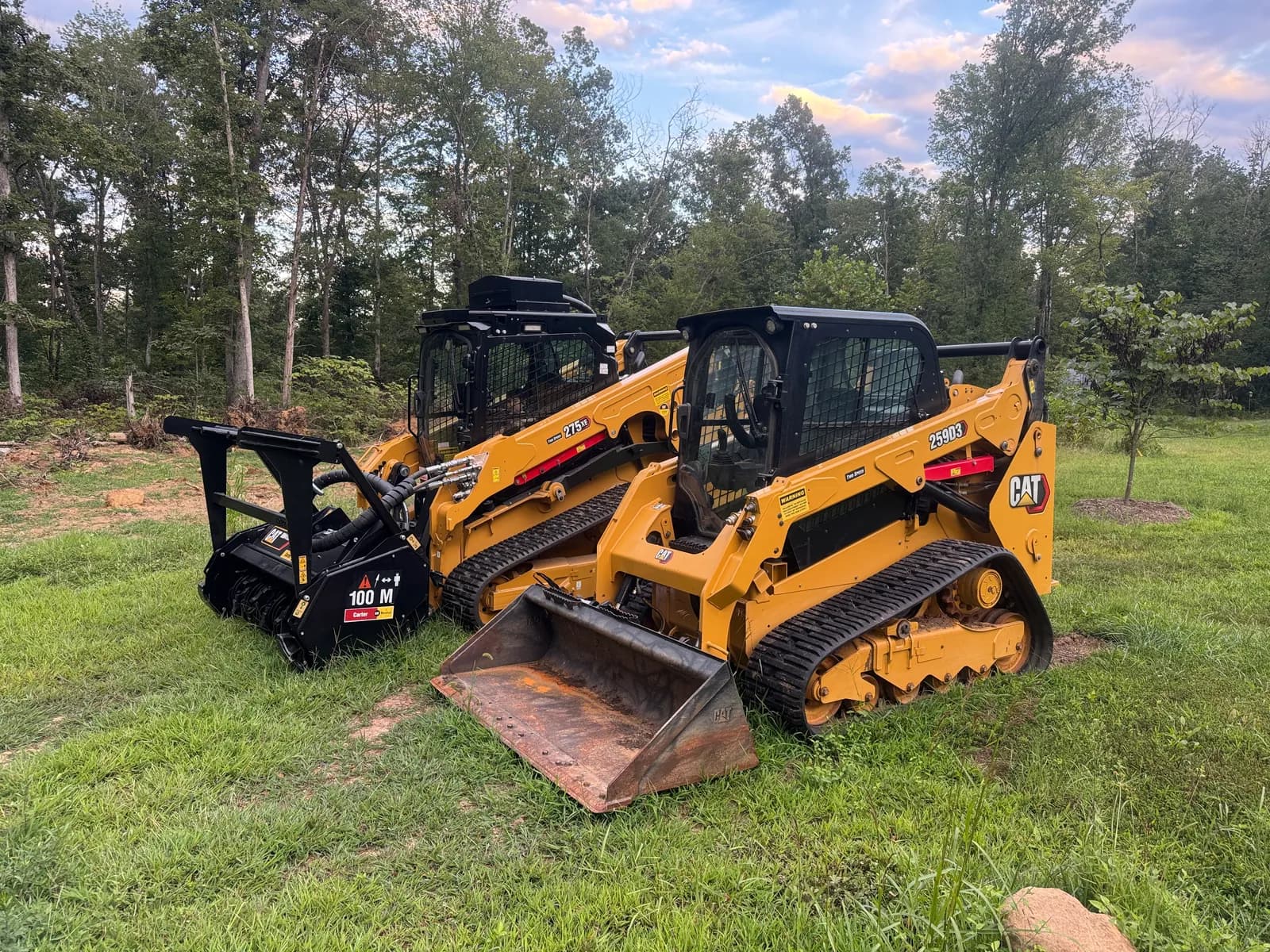
Forestry mulching can fit suitable brush and smaller woody growth. We review terrain, wet areas, obstacles and machine access before choosing an approach. Trees to retain and sensitive areas should be identified early.
Discuss your property ↗BEFORE WORK BEGINS
Open a defined corridor through overgrowth. Natural terrain, mulch and roots can remain; describe the walking surface you expect before agreeing on the finish.
Recover vegetation-obstructed lanes between useful parts of the property. Vehicle access needs a separate review of width, clearance, ground strength and the finished surface.
Discuss trail connections or vegetation openings for your intended use. Confirm property boundaries, retained trees and any areas excluded from work.
BUILD THE SCOPE
Identify the proposed corridor and alternatives around trees or obstacles. A marked route helps distinguish access clearing from clearing the entire property.
Tell us whether the route is for walking, maintenance or possible vehicle access. Clearing vegetation alone does not make an engineered or all-weather road.
Mention slopes, wet ground, drainage crossings and hidden debris. Road building, bridges, culverts and drainage changes are not assumed in a vegetation-clearing estimate.
PRACTICAL QUESTIONS
Discuss the location, conditions and intended finish so the proposed work fits your property.
A cleared vegetation corridor is not automatically a driveway. Grading, drainage, a load-bearing base and other road requirements need a separately reviewed scope.
That is a useful starting point for a review. Share the route, current vegetation and access. Feasibility depends on the ground conditions, obstacles and equipment clearance.
No. Mulching can leave roots and below-ground stumps, along with an uneven surface. Tell us if the intended use requires a smoother or root-free finish.
START WITH YOUR PROPERTY
Tell us what you want to clear or prepare, where it is and what you have in mind. Plans and a proposed footprint help with site preparation.
Photos are useful for the initial review. Share them when requested; avoid including people or sensitive personal information.